Tag: #Netanyahu

  • Middle East Head Line –Thursday, April 9, 2026

    Middle East Head Line –Thursday, April 9, 2026

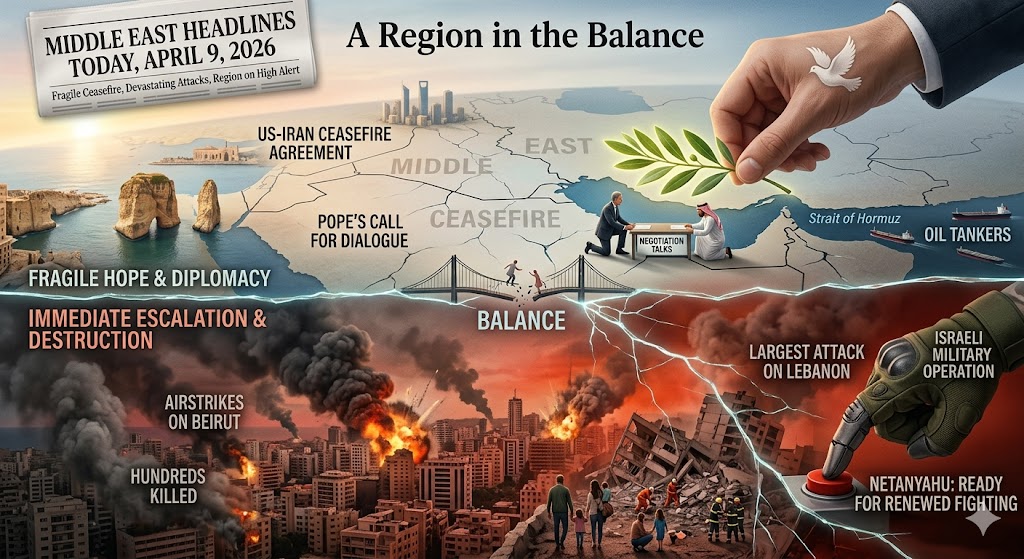
    Israel Launches Massive Strikes Across Lebanon, Hundreds Killed and Wounded

    The Israeli military conducted what it called the “largest coordinated wave of strikes” against 100 Hezbollah sites, killing and wounding hundreds across the country, including in central Beirut, just hours after a US-Israeli ceasefire with Iran was welcomed. Amnesty International issued an urgent call to protect civilians, as hospitals are overwhelmed and the humanitarian crisis escalates.

    US-Iran Ceasefire Hangs by a Thread Amid Regional Escalation

    A fragile two-week ceasefire between the United States and Iran, which includes reopening the vital Strait of Hormuz to shipping, is being severely tested by Israel’s expanded attacks on Lebanon. Iran has threatened to close the strait again and is demanding the ceasefire include Lebanon, while US officials have said the Lebanon conflict is not part of the agreement.

    Netanyahu Says Israel Ready for “Renewed Fighting” with Iran

    Israeli Prime Minister Benjamin Netanyahu emphasized that Israel remains prepared to “return to battle at any moment” against Iran, asserting the ceasefire is “not the end of the campaign.” He stated that Israel’s objectives, including neutralizing threats from Iran and its proxies, must still be achieved, “either through agreement or through renewed fighting.”

    Pope Leo Welcomes Fragile Ceasefire and Calls for Prolonged Dialogue

    Pope Leo welcomed the news of the US-Iran ceasefire with “satisfaction and as a sign of deep hope,” but acknowledged its fragility, asking for all parties to engage in dialogue for a lasting end to the conflict. The Vatican also invited people across the world to join in a prayer for peace, reflecting the global concern for the region.

    Gulf Nations on High Alert, Monitor Impact on Shipping and Oil

    Following the two-week ceasefire, global oil prices plunged, but the renewed tensions and the threat to the Strait of Hormuz have Gulf nations, including Saudi Arabia and the UAE, on high alert. Maritime organizations are working to implement mechanisms for safe navigation, as the regional impact of the Israel-Lebanon escalation is closely monitored.
  • Middle East Head Line –Wednesday, April 8, 2026

    Middle East Head Line –Wednesday, April 8, 2026

    Fragile Truce: US, Iran Agree to Two-Week Ceasefire; Israel Continues Lebanon Strikes

    Both nations agreed to a temporary cessation of hostilities and to reopen the Strait of Hormuz for 15 days, with negotiations to follow in Islamabad.Israeli Prime Minister Netanyahu welcomed the Iran truce but clarified that it does not apply to operations in Lebanon, where strikes on Hezbollah continue.

    Aid Corridor to Yemen Reopens as Port Authority Resumes Control

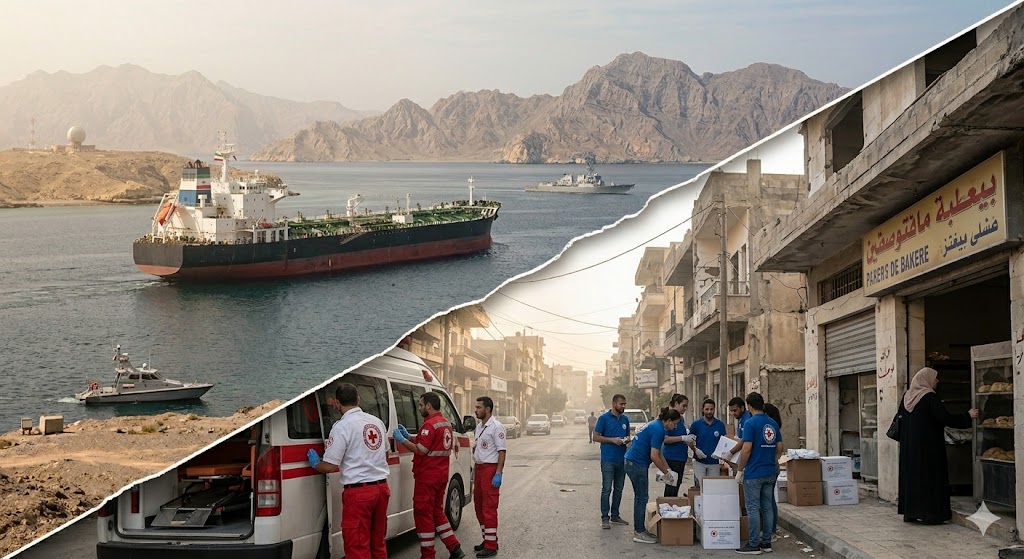
    Following years of conflict, the critical port of Hudaydah officially fully reopened to international aid shipments today under an expanded UN monitoring mandate. The move, facilitated by the regional ceasefire, is seen as a crucial step to alleviate the humanitarian crisis, though major shipping lines remain cautious.

    Historic Archaeology Find: Unknown Nabataean Complex Unearthed in Saudi Desert

    Archaeologists near Al-Ula have discovered an extensive, previously unrecorded Nabataean administrative complex buried beneath dunes, rivaling parts of Petra in scale.The site includes intricate rock-cut facades and a sophisticated water management system, significantly altering understanding of ancient spice route trade.

    Solar Expansion in the Gulf: UAE and Qatar Launch Massive New Fields

    The UAE inaugurated ‘Barakah Solar II’ today, a facility now recognized as the largest single-site solar power plant globally, capable of powering 300,000 homes.Simultaneously, Qatar declared its 2030 energy targets are ahead of schedule as it connected another 500MW field, aiming to diversify beyond liquefied natural gas.

    Tehran International Book Fair Reopens to Public, Defying Cyber Censorship

    Defying ongoing internet restrictions, the annual Tehran International Book Fair opened today with record attendance and a significant increase in international publishers.A parallel digital fair, hosted on a domestic mesh network, aims to bypass filtering, highlighting complex domestic tech landscapes amidst broader regional stability.

  • Middle East Head Line – Sunday, March 29, 2026

    Gaza Humanitarian Crisis Deepens Amid Warnings of Famine

    Aid organizations struggle to distribute food and water in Gaza, warning of imminent famine for hundreds of thousands as conflict impedes relief efforts and critical infrastructure remains heavily damaged. The international community faces increasing pressure to broker a ceasefire and facilitate unrestricted humanitarian access to the territory.

    Houthis Vow Continued Attacks on Red Sea Shipping, Dismissing International Pressure

    Despite recent US and UK airstrikes targeting their positions, Yemen’s Houthi rebels have doubled down, vowing to persist in attacks on commercial vessels in the Red Sea they perceive as linked to Israel. The group’s persistent targeting of shipping lanes has severely disrupted global trade, forcing major maritime companies to divert vessels around the Cape of Good Hope.

    US and Iran Engage in Indirect Talks Amid Regional Tensions and Nuclear Concerns

    European intermediaries are facilitating renewed indirect talks between the United States and Iran, aimed at de-escalating heightened regional tensions and potentially reviving the 2015 nuclear deal. The discussions come amidst a backdrop of ongoing drone and missile attacks on US forces in the region and Iran’s continued expansion of its nuclear program.

    Israeli Protests Escalate Over Hostage Deal and Government’s Handling of War

    Tens of thousands of Israelis take to the streets in Tel Aviv and Jerusalem, demanding the government secure a deal for the release of hostages held by Hamas in Gaza and calling for early elections. The protests highlight deep societal divisions over Prime Minister Netanyahu’s handling of the conflict and the priorities of the ongoing war effort.

    Turkey Struggles to Manage Influx of Refugees Amid Syrian Crisis and Economic Hardship

    Already hosting millions of Syrian refugees, Turkey faces increasing challenges as the long-standing conflict in Syria shows no sign of ending, and its own economy faces significant inflationary pressures. The government is balancing its humanitarian obligations with growing domestic discontent over the strain on public services and infrastructure.