Tag: #GlobalEconomy

  • Middle East Head Line –Wednesday, April 15, 2026

    Middle East Head Line –Wednesday, April 15, 2026

    US Navy Enforces Total Maritime Blockade on Iran

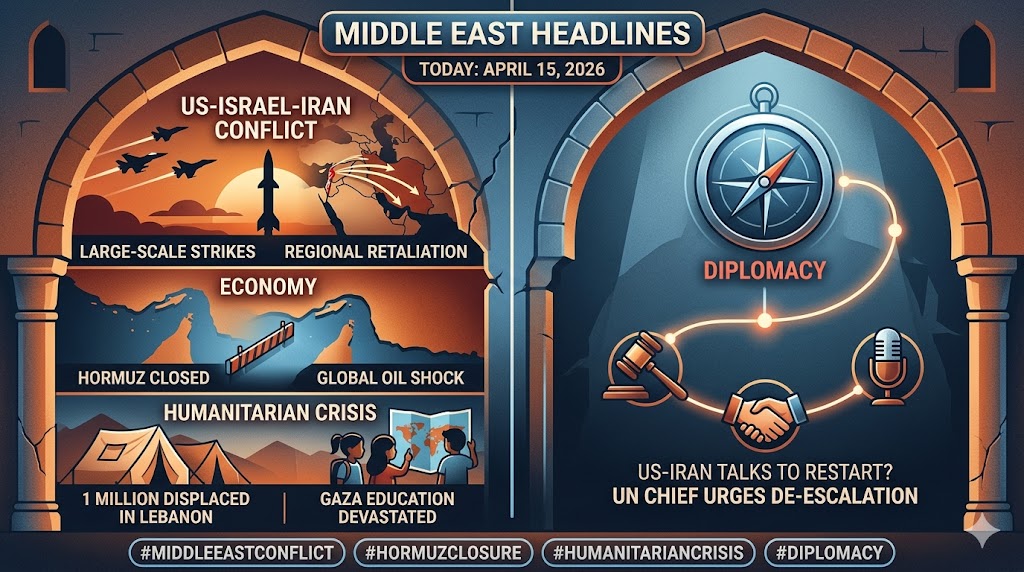
    The US military has fully implemented a naval blockade, reporting that no merchant vessels have successfully bypassed the Strait of Hormuz in the last 24 hours. President Trump warned that any vessels attempting to breach the perimeter would be destroyed as part of “Operation Epic Fury.”

    Israel and Lebanon Launch Historic Direct Peace Talks

    Ambassadors from Israel and Lebanon met in Washington for their first direct negotiations in decades, aiming to establish a permanent border framework. While envoys described the meeting as “productive,” Hezbollah retaliated by launching rockets at 13 towns in northern Israel as the talks began.

    Trump Signals Potential Return to Peace Talks in Pakistan

    President Trump stated that a “grand bargain” to end the conflict is very close and that negotiations with Tehran could resume in Pakistan within two days. Vice President JD Vance emphasized that the US is offering economic prosperity to Iran if it commits to ending its nuclear weapons program.

    Global Oil Markets Volatile as IMF Warns of Recession Risk

    Brent crude prices fluctuated near $95 as the closure of the Strait of Hormuz continues to disrupt 20% of the world’s oil supply. The IMF slashed regional growth forecasts to 1.1%, warning that a prolonged conflict could trigger a global economic downturn.
  • Middle East Head Line –Tuesday, April 14, 2026

    Middle East Head Line –Tuesday, April 14, 2026

    Strait of Hormuz Standoff: Diplomatic Talks Falter, Global Trade Faces Unprecedented Disruption

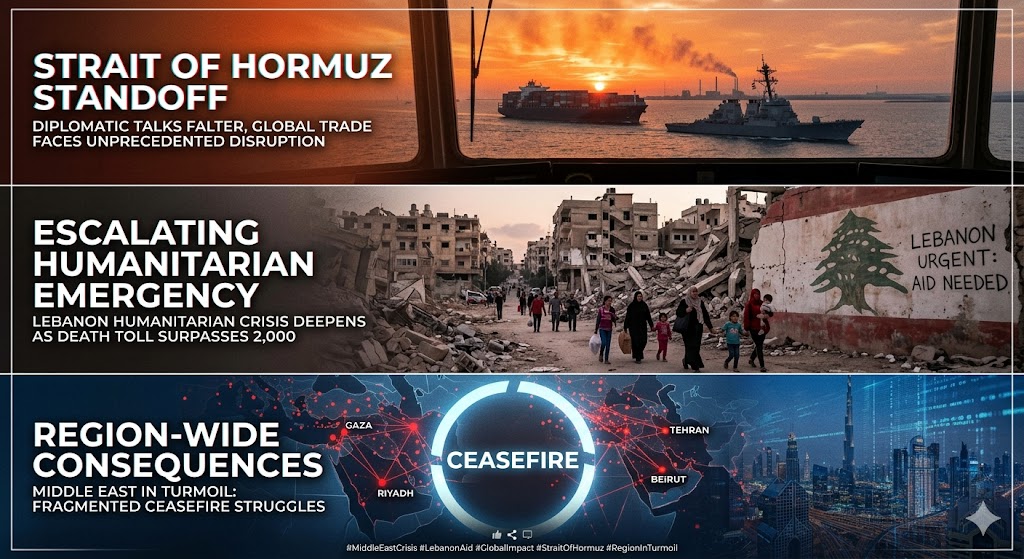
    The two-week ceasefire between the U.S. and Iran has failed to yield a lasting agreement, leading to a breakdown in diplomatic efforts and a new U.S. blockade on Iranian ports. The prolonged tension and closure of the Strait of Hormuz are causing severe disruptions to global energy and trade, with Asian markets particularly exposed.

    Lebanon Humanitarian Crisis Deepens as Death Toll Surpasses 2,000 Amid Continued Airstrikes

    The human cost of the conflict in Lebanon has escalated dramatically, with national authorities confirming that more than 2,000 people have been killed and over 6,500 injured. Ongoing airstrikes continue to displace hundreds of thousands and devastate critical civilian infrastructure, including water systems and government buildings, hindering aid delivery.

    Middle East in Turmoil: Fragmented Ceasefire Struggles as Conflict Impacts Ripple from Gaza to the Gulf

    While a nominal ceasefire holds, periodic violence and cross-border strikes persist across multiple fronts, including Gaza, the West Bank, and the Gulf, stretching the limits of regional stability. Beyond the conflict zones, the economic and human development impacts are being felt across Asia and the Pacific, threatening years of progress.

  • Top Head Line – Thursday, April 9, 2026

    Top Head Line – Thursday, April 9, 2026

    U.N. General Assembly Overwhelmingly Rejects Russia’s Annexation Attempts in Ukraine

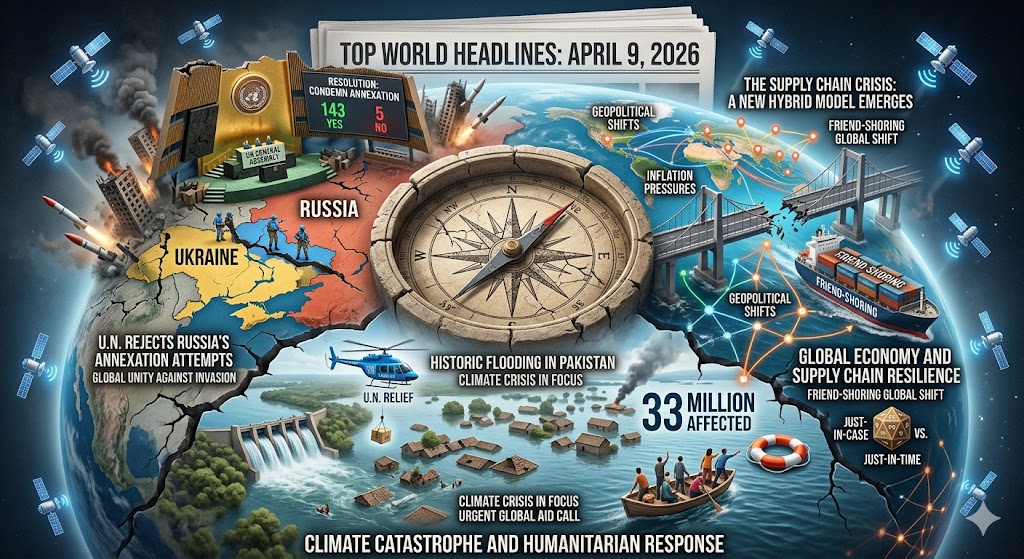
    The 193-member body voted 143-5, with 35 abstentions, to condemn Russia’s ‘illegal so-called referendums’ in four partially occupied Ukrainian regions. The resolution, which has no legal force but strong symbolic weight, called on all countries not to recognize any alteration of Ukraine’s borders and demanded Russia reverse its annexation decisions immediately.

    Historic Flooding in Pakistan: Catastrophe Displaces Millions, Climate Crisis in Focus

    Widespread extreme monsoon rains have caused unprecedented flooding across Pakistan, submerging a third of the country and affecting over 33 million people. The visual scale of the devastation has brought renewed, urgent global attention to the immediate impacts of climate change on vulnerable nations, forcing discussions on adaptation and loss and damage funding ahead of COP27.

    The Global Supply Chain Crisis: A New ‘Hybrid’ Model Emerges to Navigate Geopolitical and Economic Shockwaves

    Businesses worldwide are rapidly redesigning supply chains, shifting from a ‘just-in-time’ efficiency model to a ‘just-in-case’ resilience strategy to cope with the ongoing visual disruption. New data shows a proliferation of ‘friend-shoring’ and regional hubs, a clear structural shift impacting global inflation and energy markets, which are all visuals for the economic news.