Tag: #Conflict

  • Middle East Head Line –Thursday, April 16, 2026

    Middle East Head Line –Thursday, April 16, 2026

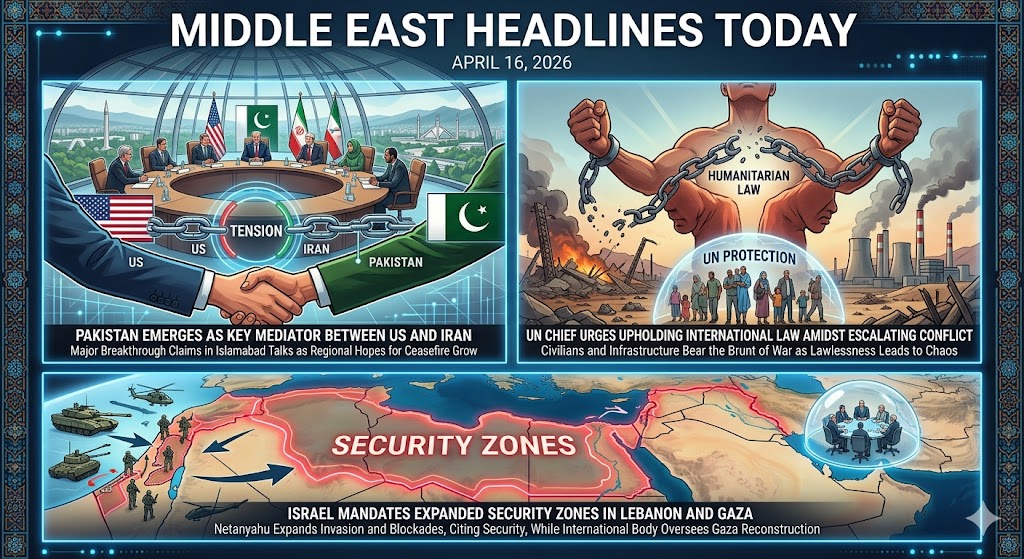
    Significant Progress Reported in Oman-Led De-escalation Talks Between the U.S. and Iran.

    Following days of intense shuttle diplomacy in Muscat, mediators report a potential breakthrough in de-escalating military tensions and resuming some elements of the nuclear dialogue. Both Washington and Tehran are reportedly considering “confidence-building measures” in a move that could reshape regional security dynamics.

    Heightened Regional Anxiety as Strikes and Counter-Strikes Continue to Disrupt Red Sea Shipping Lanes.

    Commercial vessels are increasingly rerouting around Africa as maritime security deteriorates following a new wave of attacks. Major shipping conglomerates warn of supply chain chaos and significant insurance premium spikes, potentially reigniting global inflationary pressures.

    Humanitarian Catastrophe Deepens in Gaza Amid Continued Aid Blockades and Intense Fighting.

    UN agencies warn of widespread famine and the complete collapse of essential services in Northern Gaza. International pressure mounts for an immediate ceasefire and the unhindered delivery of massive humanitarian relief as civilian casualties continue to soar.

    Saudi Arabia Unveils Massive New Investment Fund Dedicated to AI and Future Tech.

    In a major push for Vision 2030 diversification, Riyadh announces a $40 billion initiative to foster a domestic AI ecosystem, targeting global partnerships and talent. The move underscores the Kingdom’s ambition to become a primary technological hub in the Middle East, challenging traditional economic models.

    Middle East Green Initiative Moves from Promises to Action with Massive Solar Project Funding.

    Regional leaders, led by Saudi Arabia and the UAE, activate billions in funding for large-scale renewable projects, focusing on new solar parks and green hydrogen production. The aggressive shift aims to transition the region from oil dependency toward a sustainable, low-carbon future before the next global climate summit.
  • Middle East Head Line –Thursday, April 9, 2026

    Middle East Head Line –Thursday, April 9, 2026

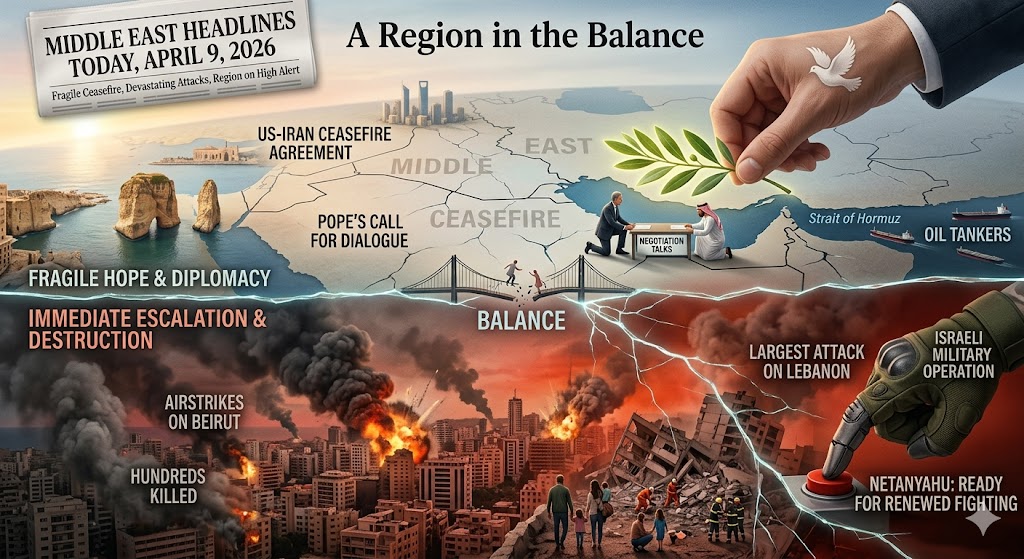
    Israel Launches Massive Strikes Across Lebanon, Hundreds Killed and Wounded

    The Israeli military conducted what it called the “largest coordinated wave of strikes” against 100 Hezbollah sites, killing and wounding hundreds across the country, including in central Beirut, just hours after a US-Israeli ceasefire with Iran was welcomed. Amnesty International issued an urgent call to protect civilians, as hospitals are overwhelmed and the humanitarian crisis escalates.

    US-Iran Ceasefire Hangs by a Thread Amid Regional Escalation

    A fragile two-week ceasefire between the United States and Iran, which includes reopening the vital Strait of Hormuz to shipping, is being severely tested by Israel’s expanded attacks on Lebanon. Iran has threatened to close the strait again and is demanding the ceasefire include Lebanon, while US officials have said the Lebanon conflict is not part of the agreement.

    Netanyahu Says Israel Ready for “Renewed Fighting” with Iran

    Israeli Prime Minister Benjamin Netanyahu emphasized that Israel remains prepared to “return to battle at any moment” against Iran, asserting the ceasefire is “not the end of the campaign.” He stated that Israel’s objectives, including neutralizing threats from Iran and its proxies, must still be achieved, “either through agreement or through renewed fighting.”

    Pope Leo Welcomes Fragile Ceasefire and Calls for Prolonged Dialogue

    Pope Leo welcomed the news of the US-Iran ceasefire with “satisfaction and as a sign of deep hope,” but acknowledged its fragility, asking for all parties to engage in dialogue for a lasting end to the conflict. The Vatican also invited people across the world to join in a prayer for peace, reflecting the global concern for the region.

    Gulf Nations on High Alert, Monitor Impact on Shipping and Oil

    Following the two-week ceasefire, global oil prices plunged, but the renewed tensions and the threat to the Strait of Hormuz have Gulf nations, including Saudi Arabia and the UAE, on high alert. Maritime organizations are working to implement mechanisms for safe navigation, as the regional impact of the Israel-Lebanon escalation is closely monitored.

  • Middle East Head Line – Thursday, April 2, 2026

    Lebanon Protests Intensify Over Economic Crisis

    Protests continue across Lebanon as citizens voice their anger over the country’s severe economic collapse, which has led to rampant inflation and fuel shortages. The ongoing unrest has put immense pressure on the government to address the worsening situation.

    Tensions Escalate Between Israel and Palestinians in Gaza

    Tensions have risen once again in the Gaza Strip after an exchange of fire between Israeli forces and Palestinian militants. This recent flare-up follows weeks of relative calm and raises concerns of a renewed escalation of violence in the region.

    Turkey and Egypt Hold High-Level Talks to Improve Ties

    Diplomats from Turkey and Egypt are holding talks in Cairo in an attempt to mend their strained relationship. The discussions are seen as a significant step towards normalizing relations between the two regional powers after years of friction.

    Oil Prices Fluctuate Amidst Middle East Geopolitical Uncertainty

    Oil prices are experiencing significant volatility due to ongoing geopolitical uncertainties in the Middle East. The instability in the region is directly impacting global oil markets and leading to unpredictable price movements.

    Humanitarian Situation Worsens in Yemen Due to Ongoing Conflict

    The ongoing conflict in Yemen has resulted in a dire humanitarian situation, with millions of people facing starvation and disease. Despite international efforts to broker a peace deal, the fighting continues, exacerbating the suffering of the Yemeni people.

    Saudi Arabia and Iran Signal Willingness to Ease Tensions

    In a surprising turn of events, Saudi Arabia and Iran have signaled a willingness to de-escalate tensions and engage in dialogue. The two regional rivals have been involved in a long-standing proxy war, and any move towards rapprochement could have significant implications for the Middle East.